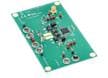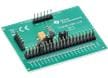

TPSM843B22EVM

Texas Instruments
595-TPSM843B22EVM
TPSM843B22EVM

Fabricante:

Descripción:
Herramientas de desarrollo de administración de IC TPSM843B22 synchrono us buck evaluation

En existencias: 5

Existencias:
5 Se puede enviar inmediatamente
Plazo de entrega de fábrica:
12 Semanas Tiempo estimado de producción de fábrica para cantidades superiores a las que se muestran.
Mínimo: 1   Múltiples: 1   Máxima: 5
Precio unitario:
$-.--
Precio ext.:
$-.--
Est. Tarifa:

Precio (USD)

Cantidad Precio unitario
Precio ext.
$58.81 $58.81

Atributo del producto Valor de atributo Seleccionar atributo
Texas Instruments
Categoría de producto: Herramientas de desarrollo de administración de IC
RoHS:  
Evaluation Modules
DC/AC Switching Converter
TPSM843B22
TPSM843B22
Marca: Texas Instruments
Tipo de producto: Power Management IC Development Tools
Cantidad de empaque de fábrica: 1
Subcategoría: Development Tools
Productos encontrados:
Para mostrar productos similares, seleccione al menos una casilla de verificación
Seleccione al menos una de las casillas de verificación anteriores para mostrar productos similares en esta categoría.
Atributos seleccionados: 0

USHTS:
9030333800
TARIC:
9030337000
ECCN:
EAR99

TPSM843B22EVM Power Module Evaluation Module

Texas Instruments TPSM843B22EVM Power Module Evaluation Module (EVM) is designed to provide access to the features of the TPSM843A22. The TPSM843A22 is a synchronous buck module that provides up to a 20A output and 4V to 18V input. The high-side and low-side MOSFETs are incorporated inside the TPSM843A22 package, along with the gate-drive circuitry, inductor, and basic passives. The low drain-to-source on-resistance of the MOSFET allows the TPSM843A22 to achieve high efficiencies and helps keep the junction temperature low at the rated output current. Fixed frequency advanced current mode control will enable the user to synchronize the module to an external clock source. An external divider allows for an adjustable output voltage. The Texas Instruments TPSM843B22 FSEL and MSEL pins provide selectable switching frequency, soft-start time, current limit, and internal compensation.